Monday, August 22, 2011

COSCBWI August Meeting: 1st Pages

Our SCBWI meeting for August was an open-critique where members brought in the first page of their manuscript.  We read each first page aloud, then offered feedback as a group.  Here are some pointers and common issues that came up:

1-Be sure you double space your manuscript, use 12 point font, and have one inch margins all around.  Your first page should also start about half-way down the page.  (I know, I know--what a jip!)  It's good to get into these habits from the get-go, though.  That way, when you are ready to submit, you won't go, "Shoot!  My first page cuts off in the middle of an awesome paragraph!"

2-Don't info dump on page one.  (i.e. don't give the main character's entire list of extended family members or describe every piece of clothing in their wardrobe.)  Sometimes less is more.

3-On the other hand, don't be too vague either.  It's nice to have your main character's name on page one, one or two defining features of his/herself (looks, personality traits, etc.) AND/OR the environment so readers feel grounded in the story.  From that list, pick what's most important to your story.  If little Betsy Lou will be learning to overcome her fears in the book, we really ought to see that she's a scardey-cat on page one.  If your book is about city-dwelling dinosaurs, it would be good to know your book takes place in New York City and not the jungle.  And if Timmy's story is all about dying his hair magenta, then his boring hair color is a must-know upfront.  

4-Do try to be exciting and make your reader eager to turn to page 2.  You can entice your reader to flip that page by incorporating a number of techniques including suspense, humor, intrigue, action, sympathy, attitude (and many many more!)  It's a good idea to pick up some of your favorite books and study the techniques those authors used on their first pages that made you say, "I must read more!" 

5-Remember that your first page is your book's first impression.  Make it as polished as possible and get as many pairs of eyes on it as you can.  You'll be glad you did. :)

There's one other piece of advice I've always taken to heart regarding first pages.  I heard it when I attended the Northern Ohio SCBWI conference in 2009 and it's stuck with me ever since.  The conference had a panel event where several agents and editors gave their first impressions of attendee-submitted first pages.  The advice they gave us was this: your first page should make a promise to your reader.  A promise.  What that promise is, is completely up to you.  Makes you think, huh?

What things do you like to see in the first page of book?  Do you have a favorite book opening?  (I'm pretty partial to the first page of Harry Potter!)  And if you feel overwhelmed by the daunting task of creating a rockin' first page, here's Snoopy to make you feel better!

Happy writing!

Snoopy/Peanuts is copyright Charles Schulz and Peanuts Worldwide LLC

Tuesday, August 16, 2011

WriteOnCon

Hello everyone!  I'm over at WriteOnCon this week--a free online writing conference chock full of publishing information, vlogs, and online chats with industry professionals.  There are also critique forums and the opportunity for agents and editors to scout your stuff.  If you're a writer, then you should be there too! 

Check it out:
www.writeoncon.com

Hope to see you there!

Wednesday, August 10, 2011

Remember Who You Were

When writing as an adult for kids, it's important to keep your emotions and reactions in touch with your character's age.  If you drop a worm on the head of a three year old picture book character, eleven year old middle grade character, and seventeen year old young adult character, you would have quite a range of reactions.  This mindfulness can be a challenge when the adult writer is so far removed from their character's age.  Fortunately, I have a 13 year old sister to keep my mind young.
 
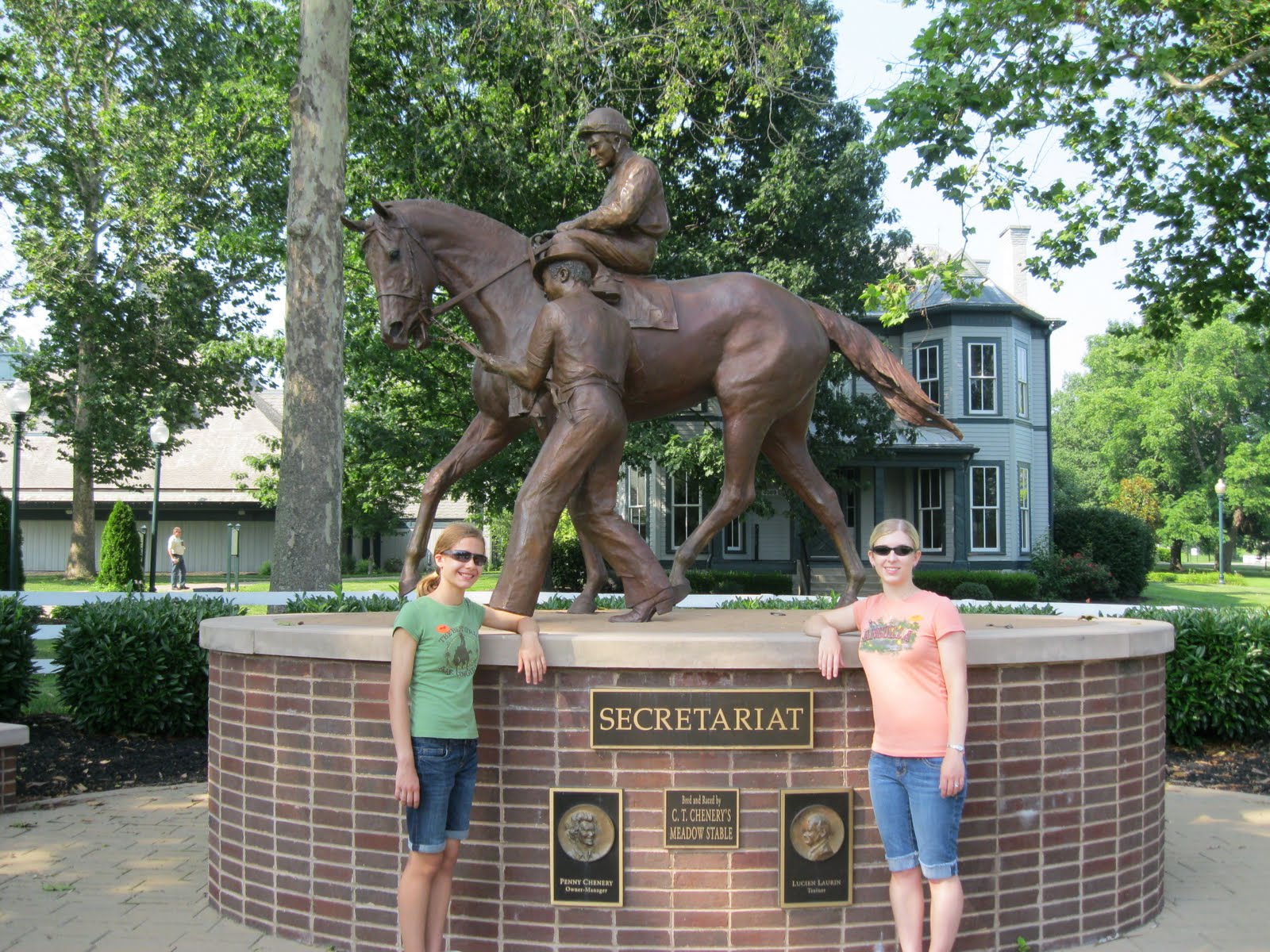
A few weeks ago, I went to the Kentucky Horse Park with my mom and little sister.  We signed up for a trail ride at the end of the day where you actually got to ride horses instead of just look at them.  Everyone over 18 was not required to wear a helmet, but I opted to anyway 1) for safety's sake and 2) so sis didn't feel like a total loser.  She got antsy at the mere mention of "helmet," frantically scanning the group to make sure no cute boys were within a ten mile radius.  (Yeah, I'm not sure there were any boys ages 10-25 in the entire Horse Park...)  
 
We stood in line together waiting for our helmets.  When it was our turn, the worker held up a plain, black, normal helmet.  He sized us both up for a moment (note: there might be a millimeter difference in our height), and handed the helmet to my sister.  Then he turned around, plucked a star-spangled monstrosity from the stack, and plunked it on my head.  Truth be told, it was atrocious.  It was like somebody threw up the American flag and molded it into a helmet.  I laughed, tightened the chinstrap, and joined my sister waiting with the other already snickering riders.  The look of utter relief in my sister's eyes practically shouted, "I'm sooooooo glad that's on you and not me."   
 
I'm too sexy for this helmet.
At once, I saw myself in her sneakers twelve years ago.  7th Grade Kathryn would have been mortified to have that thing on her head.  She would have wanted to crawl into a hole and die.  She would have been paranoid that all the cool kids in school would suddenly appear behind her.  She would have been certain that satellite pictures taken from space were being posted all over the internet for the entire world to mock.  (Hey, I never said 7th Grade Kathryn was rational.)  My adult reaction was, "No biggie."  I cracked jokes with the other riders and wished I had my camera to document the moment.  But to 7th Grade Kathryn, wearing that helmet would have been the difference between having a fun day and having a miserable one.
 
Even without a patriotic helmet on her head or a single boy in sight, my sister was still anxious about what horse she would get.  I didn't care if they gave me a polka dot horse with a rainbow mane and tail; I was simply happy to be riding!  (As such, I got a lovely fellow named Nacho who was proudly pooping in the first picture the workers took of me during the ride.  I kind of wish we'd bought that picture now...)  My sister got her wish for a pretty horse and had a completely non-eventful, embarrassment-free ride--which resulted in a non-eventful, tear-free car ride home for the rest of us.
 
See?  I told you we're practically the same height!
It was rather enlightening to see this situation from my little sister's perspective.  Had I been writing a similar scene in a book, my adult emotions might have gotten everything wrong.  My little sister reminded me that the world is a much more embarrassing place to a middle schooler and that what I consider a molehill, she might see as Mt. Everest (and vice versa).  All in all, this was a mutually beneficial experience.  She taught me a lesson and I spared her from having to wear that stupid helmet.  Deep down, I'm soooooo glad they put it on me and not her, too. :)    
 
What's something that doesn't phase you now that would have absolutely mortified your 7th Grade Self?

Wednesday, August 3, 2011

Book Review #3: Nightshade City

This week's book review is Hilary Wagner's awesome middle grade novel, Nightshade City.  This is a true animal fantasy story where the talking animals are not just side characters, but take center stage as the main feature.

Here's the summary blurb from Wagner's website:

Deep beneath a modern metropolis lies the Catacombs, a kingdom of remarkable rats of superior intellect. Following the Bloody Coup, the once peaceful democracy has become a dictatorship, ruled by decadent High Minister Killdeer and his vicious henchman Billycan, a former lab rat with a fondness for butchery.

Three young orphan rats--brothers Vincent and Victor and a clever female named Clover--join forces with Billycan's archenemy, Juniper, and his maverick band of rebel rats as they plot to overthrow their oppressors and create a new city--Nightshade City. This impossible-to-put-down fantasy explores timeless themes of freedom, forgiveness, the bonds of family, and the power of love.

It's hard to avoid comparing any animal fantasy about rodents to Brian Jacques' works.  (He did sort of "write the book" on the genre.  Hee hee!)  Two hallmark characteristics of Jacques' books are their warm characters and vivid settings.  Wagner most certainly exemplifies both.  Although the majority of the characters in Nightshade City are "icky" rats, that are about as repulsive as teddy bears.  The three protagonists, Vincent, Clover, and Juniper, are delightful--the kind of critters you'd want to invite into your house rather than chase out of it.  Their emotions and interactions are engaging, and I dare your heart not to melt when Vincent and Victor show some brotherly love.  I also never thought I'd find myself so enthralled with a cast of helpful worms!  (They terrified me more than rats did when I was little...)  Of course, the villains are duly villainous, but even they have their soft-spots, too, so it's hard to truly hate the baddies.  In addition, the setting of Nightshade City is just as colorful as the cast of characters.  Although the creepy, dark Catacombs are the complete opposite of Redwall Abbey, the titular Nightshade City is bright and inviting.  You feel right at home in the caverns and halls where rats toast with tiny tankards and champion freedom.  I promise the world of Nightshade City is one you'll want to revisit long after you turn the last page.  

Something interesting to note in Nightshade City is Wagner's use of Omniscient Third Person point of view.  Wagner executes this tricky POV quite well and in doing so, she gives each character their chance to shine in the intricate, epic storyline.  I think this POV ties in with her use of characterization above; by getting in everyone's head--from the heroic Vincent to the devious Billycan--you come to love them all.  If you're considering using Third Person point of view in your own story, you'll definitely want to check out Wagner's tactics.  

Nightshade City is a great book from both a reader's and a writer's perspective.  If you want to study good use of characterization, setting, and POV, then this book is definitely for you.  If you love a great story full of suspense, intrigue and surprises, then you should pick it up, too.  And if you love anything by Brian Jacques (like me), then this book is 100% for you!  I enjoyed my time with these delightful rats and can't wait until October when the sequel, The White Assassin, comes out.  (With a title like that, book two is sure to be sweet!)

You can check out Wagner's website at: hilarywagner.blogspot.com

And if you pick up Nightshade City, let me know!  I'd love to hear what you think. :)

Note: The Nightshade City summary and cover art are both from Wagner's website.

Tuesday, July 26, 2011

7th Grade Kathryn Gets Crafty

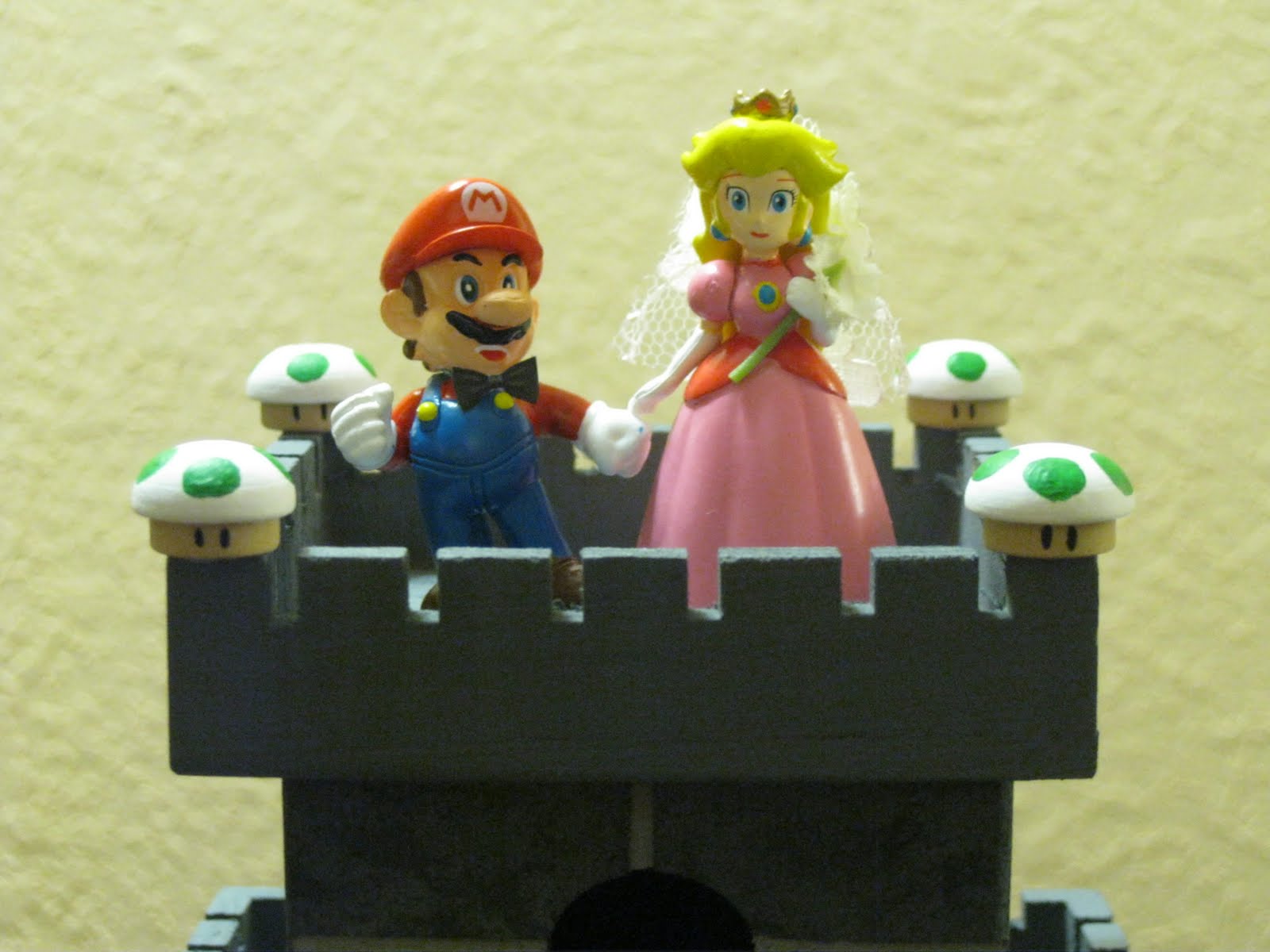
Amidst the travel and ferret caregiving, I also had a special wedding gift project I was working on during the past few weeks.  My friend and I have gotten into the habit of sending each other Nintendo gifts over the years.  I give her a birthday Mario blanket, she gives me a Zelda plushie; I send her Yoshi slippers, she sends me a Bowser race car.  It's a fun game and I began looking for a Nintendo wedding gift as soon as she announced her wedding date.  Unfortunately, it appears Nintendo never launched a wedding-themed line of toys and the few items that are hand-crafted by individual artists are not wallet-friendly.  So, after gathering information and ideas online, I decided to make her a joke Mario wedding cake topper myself!
Despite some snafoos and a terrifying battle with foaming glue, it was fun to make.  7th Grade Kathryn hasn't gotten crafty in a while--and let's just say she got carried away.  She wasn't satisfied with a hand-sponged facade and plastic figures.  No siree!  She jumped up an down like Mario in his frog-suit and said, "Oooh!  Let's paint little faces on those mushrooms!"
"And put a tiny bow tie and veil on Mario and Peach!"
"And add a Yoshi-egg present on the back!"

Adult Kathryn groaned at 7th Grade Kathryn's boundless enthusiasm, but agrees the extra-effort (and lack of sleep) was worth it in the end.  :)  

A very happy wedding wish to my beloved Coggins!  May your love ever grow as if you ate a Mega Mushroom and your happiness never end like Rainbow Road!

All the above characters and names are owned by Nintendo.
I purchased the figures.  Everything else was hand-painted.

Friday, July 22, 2011

SCBWI Summary: A Chat On Self Publishing

This week my local SCBWI chapter hosted two self-published children's authors, Peggy Harkins (The WindSinger) and Carey Corp (The Halo Chronicles: The Guardian).  The two writers led our group in a discussion on self-publishing--a publishing route that is becoming more common every day.  Though it used to come with stigma galore and rampant snubbing, recent success of many self-published authors is changing the way readers and industry pros look at non-traditionally published books.

In the not-so-distant-past, self-published books were generally considered those not "good enough" to get picked up by an agent and editor.  Instead of making the book better or writing something else, it was assumed these headstrong authors just wanted their novel published, whether it was worthy or not.  Nowadays, though, authors are increasingly choosing to self-publish for a variety of reasons from desiring a bigger piece of their royalty pie to wanting more control of their product.  Our guest authors, Harkins and Corp, self-published for their own reasons.  Harkins wanted her book in her father's hands before he passed away and Corp had been told her angel-themed book was great, but that the "Big Houses" (aka Penguin, HarperCollins, etc.) already had their books in that genre, so too bad for her.  But just as they had different reasons for self-publishing, the authors had different methods, too.

Harkins told us how after researching various print-on-demand publishers, she went with Author House (the company Paolini used to originally print Eragon once upon a time ago.)  For her, Author House had a variety of packages and options that suited her needs including editorial services (both content and mechanical), marketing materials, and the hard-copy book itself.  Of course, this type of service comes at a price.  (A quick look at their website shows basic packages from $599.00-$1,999.00--and that's not even including the extra editorial and marketing services!)  In comparison, Corp decided to go the online route first and uploaded her book to Smashwords which could then be adapted to Amazon and Barnes & Noble sites for downloading to all e-reader devices.  She wanted to focus on her online presence and only printed a small number of hard-copy books for family, friends, her dentist, etc. and any potential book-signings, figuring strangers were more willing to take a chance on a new, self-published author by purchasing a $2.99 e-book rather than a $10.00+ hard-copy.  After doing some research, she decided to go with Create Space for her printer and just received her first box of books the same day she spoke to us!  (How cool is that?!)

Of course, there are many pros and cons of self-publishing.  Here are some they mentioned:

Pros
-Author own all the rights to their book--that's right, ALL! :)
-Author gets a bigger chunk of the royalties
-Author gets to design their own cover
-Author can put extra things in the book like websites to visit or hotlines to call
-Author controls their writing destiny (can publish one book or fifteen different books and no on can stop them!  Mwa ha ha!)
-If the book sells really well, it can invoke the interest of agents and editors for future projects...

Cons
-Author has to work extra-hard to promote their book (although arguably, you have to do this more and more even at the Big publishing houses)
-Author doesn't have Big publishing house contacts, reviews and reputations to back them up
-Author still has some self-publishing stigma to battle
-Author has to design their own cover (for some people, this is either a blessing or a bane...)
-Author can spend A LOT of out-of-pocket money
-Self-published books will rarely be added to "Big Box" book store shelves

Both Harkins and Corp are new to this game of self-publishing and are unsure how successful the endeavor will turn out.  Both are glad they made this choice but are open to pursing the agent/editor route in the future.  Quite frankly, there are ups and downs to whichever publishing method you decide to follow.  Agents, editors and publishing houses do a lot of the legwork for you and make sure your book is as spectacular as it can possibly be.  HOWEVER they take a hefty chunk of the books sales and are harder to get into than a Hanson concert in 1997.  Self-publishing gives you more control of your product and profit, but you're forced to face everything as a one-person army.  It's an uphill battle either road you choose.  But hey, no one ever said writing was easy!
Us writers (the crowd) ALL want that agent's/editor's attention (aka hunky Taylor Hanson).
Harkins and Corp are both indomitable, impressive writers who grabbed the bull by the horns and are helping to lead the way in this self-publishing revolution.  I wish them the best of luck and can't wait to find out what their futures hold!  Be sure to check out their websites:

http://harkinsbooks.com
http://www.careycorp.com

(On a side note, at the end of our meeting both authors gave away their books and I won Harkins' novel, The WindSinger!  Might be seeing a review for it in the upcoming weeks!) 

Both cover pics are from the respective author's website
Hanson pic from http://users.hanson.net

Tuesday, July 19, 2011

Book Review #2: The Knife Of Never Letting Go


While I was at my Highlights Workshop, our faculty highly recommended we all read The Knife Of Never Letting Go.  Since there are talking animals in the book, I thought it would be particularly helpful for my own writing and was very eager to check it out!

Here's what Patrick Ness' website has to say about the book:

"Todd Hewitt is the last boy in Prentisstown.  But Prentisstown isn't like other towns.  Everyone can hear everyone else's thoughts in a constant, overwhelming, never-ending Noise.  There is no privacy.  There are no secrets.  Or are there?  Just one month away from the birthday that will make him a man, Todd unexpectedly stumbles upon a spot of complete silence.  Which is impossible.

Prentisstown has been lying to him. And now he's going to have to
run..."

After reading The Knife of Never Letting Go, I can see why our faculty thought so highly of it.  Patrick Ness is a very talented author and crafts a story that is strong in both its writing and plot.  The premise itself hooks you from the get-go: New World is a place where everyone can hear everyone else's thoughts--from the creatures in the swamp to the Mayor when he's sitting on his toilet.  No one is spared from this phenomenon, with one exception (which is a big part of the novel, so I'm not going to ruin it for you!)  The story is told in first person from Todd's perspective and is a great example of a strong "voice."  In addition to raging thoughts (both his own and everyone else's who invades his mind), Todd also has a dialect and punchy attitude.  The way we see the world through Todd's eyes, and how he reacts as his world unravels around him, is moving and unforgettable.  Readers are completely along for the roller-coaster ride, trying to keep pace with Todd as he outruns the baddies and flees for his life.  This break-neck pace makes the story move swiftly along, and I'm not sure I've ever read a book that had such cliff-hanger chapter endings that FORCE you to read on.  (Seriously, my husband had to shut the book for me at one point.  I wish I could write cliffhangers like that!)  It's a delightfully intricate and exciting story, too, and keeps you guessing (and laughing) all the way through the last page.

Now, back to the talking animals.  The way Ness makes his animals "talk" (or speak/think if that's a more appropriate term for it) is done quite well.  You can tell he put a lot of time into deciding how each different animal would sound and what sorts of things they would say.  These are not beings of higher intelligence; they are simply normal animals whose everyday thoughts can be heard and interpreted by humans.  The crocs say, "Flesh...feast...tooth," the squirrels shout taunts from the trees, and, well, I'll leave the rest to be surprises for you.  Todd's dog, Manchee, is the best animal of them all.  Though the pup's vocabulary may not consist of many words, what he does say is funny and infused with emotion that simply makes you love him to pieces.  Studying the way Ness portrays animal language is certainly useful in your own writing if you want a cat or elephant to speak in your story.

If you like unique, futuristic stories, The Knife of Never Letting Go is a great choice for you!  If you love stories with strong human-animal relationships, this is also the perfect book for you.  And if you want to study a creative way of portraying human-animal communication in your writing, you should definitely see Ness' talents at work.

You can find out more about Patrick Ness on his website at: http://www.patrickness.com/.  If you read this book, do let me know!  I'd love to hear what you think.  

And just in case you were wondering, do you know what sick ferrets say?

"No more medicine!  I don't want it!  It's yucky!  I hate it!  Blegh!  Leave me alone!"

Link says, "Yuck!"

Note: Cover photo is from Amazon.com.  The photograph is of my husband feeding our sick ferret, Link, his meds.