Thursday, April 18, 2013
COSCBWI April 2013 Illustrator Meeting: Postcards Part 2
This month's COSCBWI Illustrator Meeting took place at Barnes and Noble for some on-location learning. Nikki Boetger, the COSCBWI Illustrator Coordinator, first had all the illustrators gather for a little catch-up and critique session. If you remember from my summary of the March Illustrator Meeting, the COSCBWI illustrators have just started a multi-month postcard project. (You can read my summary of that meeting here.) Nikki asked us members to create two to three sketches based on our favorite fairy tales, fables, or nursery rhymes, which we were assigned to bring to the April meeting. We shared the sketches as a group and gave each other constructive feedback. Everyone had lovely sketches to share, and it was so great to see everyone's different illustration styles. (I'll share my sketches in another post soon!)
After the critiques were wrapped up, Nikki led our second discussion on illustrator postcards: What do you do with them once they're complete?
Creating an illustration and printing a postcard is not very helpful for an illustrator's career if the finished product just sits around and gathers dust. An illustrator needs to work up the courage to send their postcards out into the world! Nikki showed us how to look up publishing house information on the copyright pages of picture books. Located within the first few pages of every picture book, the copyright page is loaded with helpful information, from what year the book was published to the address of the publishing house. She pointed out that often, the copyright page actually contains multiple addresses--one for each of the publishing houses' locations around the world. And what does that mean for illustrators? It means they can potentially send their postcards to art directors at all those different locations, even within the same overarching company! (And spreading your eggs between more baskets is always a good thing!)
Nikki had several good tips for illustrators to consider when creating their postcard mailing list, including:
-Browse your local library or bookstore and look for trends within books that are published by the same house. Does your style fit with theirs? If your style is very realistic and all their work is cartoony, then they may not be the right house for your work. (Same with bright versus pastel colors, traditional versus digital mediums, subject matter, etc.)
-Also while browsing, take note of what is on the market--especially what is selling well. (It will be front and center in book stores.) Will your work appeal to a young audience? Or is your illustration style better suited to a different market, such as educational, graphic design, etc.? (And maybe you're lucky and have a style that suits many different markets and needs!)
-Remember to research each publishing house for submission guidelines before mailing your postcard to them. You may be instructed to send something specific, or discover that you'll need to acquire an agent first in order to get your work past the gatekeepers.
Nikki also noted that it is important to browse libraries and book stores a few times a year to see what's new or hot at the moment. (And if you're a writer or illustrator, you're probably already doing that anyway. Right? Nudge, nudge.) Seeing a shift in trends or a brand new book may just inspire you to send your postcards to new places!
Lastly, Nikki gave us our next assignment for the project: turning our sketches into postcards! The next Illustrator Meeting will be held May 8 (location to be determined), and Nikki would like participants to start fleshing out their sketches into full pieces. (This can be anything from adding color to painting a background, or even trying a new sketch if you don't like your current idea.) New participants are also welcome to bring sketches and jump into the project, too!
You can find out more about COSCBWI on the group website (www.coscbwi.org) and Facebook page! I hope to see you at the next Illustrator Meeting!
Monday, April 1, 2013
Book Review #18: Secrets at Sea
This month's Animal Fantasy Book Review returns to one of my favorite critters: mice! Secrets at Sea by Richard Peck has been on my reading list for quite some time. It's brimming with romance, adventure, and adorable talking mice--a winning combination! Here's the summary from the book jacket:
Helena is big-sister mouse to three younger siblings, living a snug and well-fed life within the ancient walls of the Cranston family home. When the Cranston humans decide to sail away to England to find a husband for one of their daughters, the Cranston mice stow away in the name of family solidarity.
And so begins the scamper of their lives as Helena, her siblings, and their humans set sail on a life-changing voyage into the great world of titled humans...and titled mice, and surprise endings for all.
If you're a children's writer, then you're probably already familiar with Richard Peck's work. (His novel, A Year Down Yonder, DID win the Newbery Medal!) Secrets at Sea is a charming story with the perfect mix of humor, action, and heart. Add in adorable illustrations by Kelly Murphy, and it's a book that neither children nor adults can put down! What I found particularly impressive about this book, though, are Peck's use of "mouse-isms" and pairing of voice and perspective.
Helena narrates the book from the first-person perspective. She is the current elder of the family, playing mother, father, and big-sister to three siblings. (Alas, her parents and older siblings passed away, leaving her in charge of some feisty young mice.) Peck does a fantastic job showing the world through Helena's eyes, giving the story quite a bit of attitude and humor. While the reader can tell Helena loves her siblings with all her heart, they are also a great source of irritation and frustration. Helena's well-intentioned nagging at her siblings--as well as the array of thoughts she keeps to herself--are so funny yet heartfelt. She may be annoyed that she has to sew the tail back on her brother, or lecture her sister again and again about getting too cozy with humans, but beneath all her sass is an undercurrent of worry and love. This first-person perspective, combined with Helena's strong voice, makes her such a compelling and memorable narrator--and therefore makes the story unforgettable, too. If you're thinking about writing your own novel from the first-person perspective, you should definitely see how Peck crafts an amazing narrator.
Peck's many "mouse-isms" go hand in hand (er, paw in paw?) with his use of voice. As I've mentioned in my other book reviews, world building is so important in animal fantasy stories. This doesn't just entail where animal societies live or what they eat, but their belief systems, too. In Secrets at Sea, Helena and the other mice repeat common phrases with deep meanings. From the first chapter on, a number of statements are frequently echoed, such as, "Water is not a happy subject with mice," "Times come when mice must pay their way," and, "For mice, time always seems to be running out." Mice all over the world are familiar with these sentiments, from Helena and her siblings to the Duchess of Cheddar Gorge. The common "mouse-isms" unite Peck's rodent society in an interesting way, but they also add a bittersweet tone--and a wee bit of foreboding--to Helena's narrative voice. It's a fascinating concept, and something you may just want to include in your own animal fantasy story!
If you like tales about talking mice (complete with adorable illustrations), then this book is perfect for you. If you like stories with furry wit and plenty of secrets, it's also a great pick for you. And if you've ever wondered if rodents traveled in style on grand ocean liners, then it's certainly a must-read for you! (Who hasn't wondered that?) Of course, if you write animal fantasy books, you definitely need to get your paws on a copy of Secrets at Sea.
You can find out more about Richard Peck and his other books on the Penguin website here.
And if you read this book, do let me know! I'd love to hear what you think. :)
Happy reading!
Note: Summary blurb is from the jacket copy; cover art is from the Penguin website and (c) Kelly Murphy.
Helena is big-sister mouse to three younger siblings, living a snug and well-fed life within the ancient walls of the Cranston family home. When the Cranston humans decide to sail away to England to find a husband for one of their daughters, the Cranston mice stow away in the name of family solidarity.And so begins the scamper of their lives as Helena, her siblings, and their humans set sail on a life-changing voyage into the great world of titled humans...and titled mice, and surprise endings for all.
If you're a children's writer, then you're probably already familiar with Richard Peck's work. (His novel, A Year Down Yonder, DID win the Newbery Medal!) Secrets at Sea is a charming story with the perfect mix of humor, action, and heart. Add in adorable illustrations by Kelly Murphy, and it's a book that neither children nor adults can put down! What I found particularly impressive about this book, though, are Peck's use of "mouse-isms" and pairing of voice and perspective.
Helena narrates the book from the first-person perspective. She is the current elder of the family, playing mother, father, and big-sister to three siblings. (Alas, her parents and older siblings passed away, leaving her in charge of some feisty young mice.) Peck does a fantastic job showing the world through Helena's eyes, giving the story quite a bit of attitude and humor. While the reader can tell Helena loves her siblings with all her heart, they are also a great source of irritation and frustration. Helena's well-intentioned nagging at her siblings--as well as the array of thoughts she keeps to herself--are so funny yet heartfelt. She may be annoyed that she has to sew the tail back on her brother, or lecture her sister again and again about getting too cozy with humans, but beneath all her sass is an undercurrent of worry and love. This first-person perspective, combined with Helena's strong voice, makes her such a compelling and memorable narrator--and therefore makes the story unforgettable, too. If you're thinking about writing your own novel from the first-person perspective, you should definitely see how Peck crafts an amazing narrator.
Peck's many "mouse-isms" go hand in hand (er, paw in paw?) with his use of voice. As I've mentioned in my other book reviews, world building is so important in animal fantasy stories. This doesn't just entail where animal societies live or what they eat, but their belief systems, too. In Secrets at Sea, Helena and the other mice repeat common phrases with deep meanings. From the first chapter on, a number of statements are frequently echoed, such as, "Water is not a happy subject with mice," "Times come when mice must pay their way," and, "For mice, time always seems to be running out." Mice all over the world are familiar with these sentiments, from Helena and her siblings to the Duchess of Cheddar Gorge. The common "mouse-isms" unite Peck's rodent society in an interesting way, but they also add a bittersweet tone--and a wee bit of foreboding--to Helena's narrative voice. It's a fascinating concept, and something you may just want to include in your own animal fantasy story!
If you like tales about talking mice (complete with adorable illustrations), then this book is perfect for you. If you like stories with furry wit and plenty of secrets, it's also a great pick for you. And if you've ever wondered if rodents traveled in style on grand ocean liners, then it's certainly a must-read for you! (Who hasn't wondered that?) Of course, if you write animal fantasy books, you definitely need to get your paws on a copy of Secrets at Sea.
You can find out more about Richard Peck and his other books on the Penguin website here.
And if you read this book, do let me know! I'd love to hear what you think. :)
Happy reading!
Note: Summary blurb is from the jacket copy; cover art is from the Penguin website and (c) Kelly Murphy.
Friday, March 29, 2013
COSCBWI March 2013: Reading To An Audience
This month's COSCBWI meeting featured Angela Buelsing, a librarian
with the Public Library of Cincinnati. Angela discussed a very important skill
that writers and illustrators need to learn: how to read to an
audience.
Angela spent many years honing her read-aloud skills with story
time at the library. To begin her presentation, she read a festive bunny book to
show us as an example of fun, energetic, and engaging reading. (It was
just like being back in elementary school! All we needed
were some graham cracker snacks...) After watching her in action, she
broke down some of the skills and pointers that can help make a read-aloud session a success for any audience. Some of her tips included:
-Be sure to pick the correct book for your audience. Preschoolers can't be expected to sit still for a long and wordy
picture book, while eighth graders don't want to listen to a story about bouncing bunnies.
-Learn to read sideways (or upside down) and clearly. Kids want to
see the pictures while you're reading the text, and they won't
understand you if you read too fast or mumble.
-Encourage involvement from your audience to keep them engaged. You could ask for story predictions (i.e. "There was an old lady who swallowed a....insert pause....") or point out different aspects of the illustrations, rhymes, characters, etc.
-Expect the unexpected, and roll with the punches. Anything can
happen during a read aloud session, from nosebleeds to hecklers
and every sort of interruption imaginable. Redirect disruptive kids if
possible, and engage the audience in creative ways to make interruptions
seem like a planned part of the storytelling experience.
-Leave some time for a discussion and questions at the end of your reading session. You never know what kids will want to talk about, and they are often very excited to share their thoughts on the book. They may want to know about your favorite parts, too.
-Practice, practice, practice! Be sure you know how to pronounce
every word in the story so you don't trip over your own tongue.
Angela also acted out a story to show the importance of body movements and an expressive voice. She definitely had us all captivated with her storytelling prowess! By the end of the meeting, we were all inspired to grab our favorite books and share them with a young audience. :)
If you want to learn more about COSCBWI, you can check out the group website at www.coscbwi.org. I hope to see you at our April meeting!
Monday, March 25, 2013
The Productive Slacker
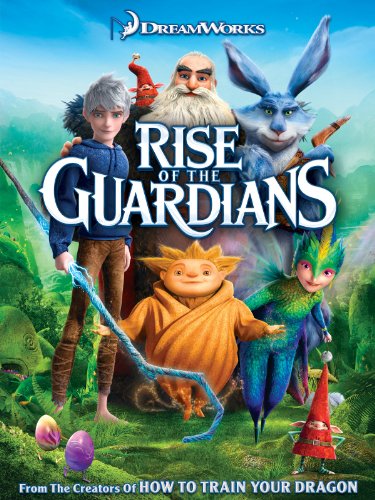
Over the weekend, I decided to take off my usual Productivity Cape and spend an afternoon at the movies. I bought a ticket for "Rise of the Guardians" and guiltily walked into the theater, knowing that I should have been writing, or reading, or revising, or querying, or working on a grant. But the movie had been out since December and would surely be out of the theaters soon--and besides, didn't I deserve a little break?
So I shut up my inner nagger, put on my 3D glasses, and promised myself I'd make up for my slacking off later.
A mere 97 minutes later, the credits were rolling and I walked out of the theater amidst throngs of chattering kids. Some kids jabbered about the cool battles; a few giggly girls gushed that the tooth fairies were soooooo cute; and there were at least one or two boys who wanted the entire audience to know that the Australian, boomerang-throwing Easter Bunny was AWESOME. Then in front of me, I watched a little girl take her mom's hand, look up and say, "Wow, that was so inspiring!"
If you haven't seen "Rise of the Guardians," I can vouch that this little girl was right on the money. I wouldn't declare it the best animated movie I've ever seen (hey--you already know "The Lion King" holds that title in my book), but it was inspiring on so many different levels for different audiences, myself included. I won't go into why the writer in me was inspired, or why the kids in the audience were inspired, because you should really go see it for yourself. But a familiar white-bearded, red-suited, jolly old elf had this to say at a moment of revelation:
"We are very busy bringing joy to children! We don't have time for....children."
Ouch. So harsh and yet, so very true.
I think it's incredibly easy for children's writers to get stuck in this situation. We spend all our time writing, revising, querying, submitting, reading, researching, and doing everything we can so that one day, our books will find their way to children and bring them all the joy we've dreamed of. But how many of us actually spend much time around children, or pay attention to the things they love?
At conferences and workshops, I always hear that aspiring writers should read, read, READ! While I agree with this 100% (and then some), I also don't think it's nearly enough. In a perfect world, kids would spend every moment of their free time snuggled up with a book, but that simply isn't the case. Kids will always share their reading time (and attention spans) with going to movies, watching TV, and playing video games. (And who knows what else in the future?!) As writers, I think keeping up with children's book trends is incredibly important, but it's also our job to understand why they love a pony named Twilight Sparkle on TV, feel the urge to catch every Pokemon, and still want to see "Ice Age" movies after four installments on the big screen.
What can't you get from a book that you can from sitting in a movie theater with sixty kids? Simply experiencing the story with them: what makes them laugh, or gasp, or kick your seat in boredom, or feel the need to tell their mom, "Wow, that was so inspiring!" It may just make you realize how you can write more comically, or adventurous, or tweak a young reader's heartstrings in your own touching scene. And it will certainly inspire you to create worlds and characters they love as much as an Australian, boomerang-throwing Easter Bunny.
I don't have children of my own, but I feel very lucky that I have a little sister twelve years younger than myself who has helped keep my inner kiddo alive. I will openly admit that I'd rather see a kids' movie than an adult one any day of the week, and that I adore TV shows on Cartoon Network and video games of the Mario variety. (And yes, that's probably why I write about talking pirate ferrets and boys who turn into horses.) But I also know how easy it is to get bogged down in the responsibilities of being a "good writer," and how weeks can go by when I meet more children in the pages of a book than in real life.
If that sounds like you from time to time, then maybe you're overdue for a trip to the movies, too. (Or the local zoo--or video game store--or library--or any place kids congregate!) I may have gone to "Rise of the Guardians" feeling guilty, but I left with more inspiration than an afternoon spent tweaking my synopsis and catching up on Twitter feeds has ever given me.
Note: Image is the DVD cover from "Rise of the Guardians." It is (c) Dreamworks and linked from www.amazon.com.
Sunday, March 17, 2013
COSCBI March 2013 Illustrator Meeting: Creating Illustrator Postcards
This month marked COSCBWI's second Illustrator Meeting! As an aspiring illustrator, I just love these meetings and find them so informative. For March, COSCBWI's Illustrator Coordinator, Nikki Boetger, led a discussion on illustrator postcards.
Illustrator postcards are the way many artists get their work in front of agents and publishing houses. They involve creating a postcard mailer that showcases at least one example of an artist's work, as well as their website, contact information, etc. A second full illustration can fill up the back side, or artists can incorporate a small art piece instead to leave plenty of room for mailing labels. Nikki showed us many postcard examples from her colleagues and shared a lot of great pointers for illustrators to consider including:
Size: Do you want a big mailer that costs more money to make, or a little one that could get lost easily?
Material: Do you want it to be glossy or matte? Heavy card-stock or textured? What will hold up best in the mail?
Season: Do you want to tailor your piece to the corresponding season, or just send your favorite example of your work? How frequently do you want to mail a new postcard to your list of contacts?
Post Office Handling: Will your post office add stamps or tapes anywhere on your postcard that might cover up your illustration?
Bleed Room: Does your picture go all the way to the edges of your postcard? Will it run the risk of getting ruined if part of it is cut off during the printing process, or have you left a nice bit of wiggle-room for safety?
By thinking about these questions, you can decide how much you to want spend to make a professional mailer AND avoid creating a postcard that might be demolished, dirty, or covered-up by the time it gets to its recipient. She recommended checking out online printing companies like Vistaprint, as well as local businesses to see who has the type of product you are looking for.
After explaining the basics of making a mailer, Nikki announced a brand-new project for all the COSCBWI illustrators: creating postcards for ourselves! This multi-month project will take COSCBWI illustrators through the entire postcard-making process--from sketching concept art to formatting and printing a final product. All COSCBWI members are welcome to take part, and there's no requirement to send the postcard off at the end of the project if you don't feel you're ready. (While that would be wonderful, it's perfectly fine to use this project for practice, too.)
If you think you'd like to take part, Nikki wants all participants to bring sketches of potential postcard illustrations to the next Illustrator Meeting. To get our creative juices flowing, she suggested we choose our favorite nursery rhyme, fable, or fairy tale to illustrate. Once everyone has a few sketches, she'll go over the next steps in making our ideas a professional postcard!
You can find more information about COSCBWI at www.coscbwi.org. April's Illustrator Meeting will take place on April 10th at 7:00 PM at the Barnes and Noble in Upper Arlington.
I hope to see you at the next Illustrator Meeting with plenty of sketches in tow! I'm already wracking my brain for a good idea... :)
Wednesday, March 6, 2013
Celebrating The Old And New
You know how a picture is worth a thousand words? Well, words can't describe how I feel about this:
Yup! After two years with my old cheapo tablet, I decided to upgrade to a Wacom Intuos model! All I can say is, it is heavenly!
Now, don't get me wrong. There is nothing bad about Monoprice tablets. When I went tablet shopping two years ago, I had no idea if I'd even like digital art, so I didn't want to invest a lot of money in the experiment. While the Monoprice was a great piece of equipment to get my feet wet, I simply outgrew it. The more art I did, the more I felt limited by the tablet's features (or lack thereof). Throw in some recent pen reliability issues (undoubtedly caused by two years of solid use), and I decided it was definitely time for an upgrade.
I chose the Intuos 4 model 1) because it is significantly cheaper than the newer Intuos 5's with similar features and 2) it was recommended to me by numerous other digital artists. I also downgraded to a size "Small," while my Monoprice was the equivalent of a "Medium" tablet. I realize that may sound crazy, but so far I think the smaller tablet is much more manageable. (Plus, it's kind of nice to not have my tablet hanging off the desk!)
Is there really a big difference between my cheaper old Monoprice and new Wacom? Heck yes! The new pressure sensitivity is double what it used to be, and the Wacom screen has a lovely, textured feel that makes sketching a breeze. You can even tell a difference just in comparing the tablet pens:
AND I can flip the new pen over while drawing and "erase" my digital work just like it's a pencil! (Super-cool!) Now, I could probably bore you to tears praising all the great features (like a scrolling wheel--or hot keys--or variety of pen tips!), but I know you'd rather see it in action. So...
TA DA!
I painted everyone's favorite green-scarred horse, Ellis! This sketchy little speedpaint is the first 100% digital piece I've ever done. It took about three hours (yes, that counts as a "speedpaint" for me) and involved around fifty exclamations of, "Ooooh!" and "Ah!" as I finagled with all the Intuos features.
So you see the "new" I'm celebrating. But what about the old?
Well, I just celebrated the sixth anniversary of my manuscript, The Beast of Bannock, at the end of February! (Huzzah!)
Ellis and I have certainly been through a lot over the years, and it seemed appropriate that he should have the honor of christening my new tablet. This poor guy sat on the back-burner while I focused on writing and revising Pirate Ferret for most of 2012, but I'm looking forward to giving Ellis' story the royal treatment this year! :)
And now you're up to speed with everything I'm celebrating! I'm eager to see what I can accomplish with my new tablet and can't wait to start those Beast of Bannock revisions!
If I can keep up this speedy painting, I hope to have a lot more art to share with you, too! You all like paintings of horsies, right? ;)
![]() |
| <Insert hallelujah chorus> |
Yup! After two years with my old cheapo tablet, I decided to upgrade to a Wacom Intuos model! All I can say is, it is heavenly!
Now, don't get me wrong. There is nothing bad about Monoprice tablets. When I went tablet shopping two years ago, I had no idea if I'd even like digital art, so I didn't want to invest a lot of money in the experiment. While the Monoprice was a great piece of equipment to get my feet wet, I simply outgrew it. The more art I did, the more I felt limited by the tablet's features (or lack thereof). Throw in some recent pen reliability issues (undoubtedly caused by two years of solid use), and I decided it was definitely time for an upgrade.
I chose the Intuos 4 model 1) because it is significantly cheaper than the newer Intuos 5's with similar features and 2) it was recommended to me by numerous other digital artists. I also downgraded to a size "Small," while my Monoprice was the equivalent of a "Medium" tablet. I realize that may sound crazy, but so far I think the smaller tablet is much more manageable. (Plus, it's kind of nice to not have my tablet hanging off the desk!)
| Old tablet overboard! |
Is there really a big difference between my cheaper old Monoprice and new Wacom? Heck yes! The new pressure sensitivity is double what it used to be, and the Wacom screen has a lovely, textured feel that makes sketching a breeze. You can even tell a difference just in comparing the tablet pens:
![]() |
| Mmmmmm...precision... |
AND I can flip the new pen over while drawing and "erase" my digital work just like it's a pencil! (Super-cool!) Now, I could probably bore you to tears praising all the great features (like a scrolling wheel--or hot keys--or variety of pen tips!), but I know you'd rather see it in action. So...
TA DA!
![]() |
| Ellis says, "Do I look pretty?" |
I painted everyone's favorite green-scarred horse, Ellis! This sketchy little speedpaint is the first 100% digital piece I've ever done. It took about three hours (yes, that counts as a "speedpaint" for me) and involved around fifty exclamations of, "Ooooh!" and "Ah!" as I finagled with all the Intuos features.
So you see the "new" I'm celebrating. But what about the old?
Well, I just celebrated the sixth anniversary of my manuscript, The Beast of Bannock, at the end of February! (Huzzah!)
Ellis and I have certainly been through a lot over the years, and it seemed appropriate that he should have the honor of christening my new tablet. This poor guy sat on the back-burner while I focused on writing and revising Pirate Ferret for most of 2012, but I'm looking forward to giving Ellis' story the royal treatment this year! :)
And now you're up to speed with everything I'm celebrating! I'm eager to see what I can accomplish with my new tablet and can't wait to start those Beast of Bannock revisions!
If I can keep up this speedy painting, I hope to have a lot more art to share with you, too! You all like paintings of horsies, right? ;)
Monday, March 4, 2013
COSCBWI February 2013: The Path to Publication for an Illustrator
Boy, am I all discombobulated with the date change in COSCBWI's monthly meetings! I truly intended to have this post up by the end of February, but considering our meeting was on the 27th, I suppose that practically was the end of the month! ;)
COSCBWI hosted guest speaker Alex Clark for the February meeting. Alex is the illustrator of two picture books, Your Time Will Come and Captain Hammer and Super Sean: The Case of the Missing G. He shared his path to publication with us, focusing on the non-traditional route he chose for his most recent project, Your Time Will Come.
If there's one thing I've learned from all of the wonderful COSCBWI speakers, it's that there are many ways to break into the publishing world. Alex started out with a background in design, illustrating clothing graphics for companies like Abercrombie & Fitch and Walmart. When his son was diagnosed with speech apraxia, he became involved in the CASANA organization. In a stroke of serendipity, the contacts he made with the organization brought about the opportunity to illustrate his first book, Captain Hammer and Super Sean: The Case of the Missing G. After that project was finished, he and the real-life Dr. Hammer decided to embark on a new project together which became Your Time Will Come. After shopping the book around, they looked into self-publishers, ultimately deciding on Word Association Publishers. The book came out this past December, and Alex has been busy getting the word out to fans and readers.
After describing his publication journey, Alex took questions from the group. He gave a lot of great advice about the pros and cons of self-publishing. He said that attitude really is everything, from promoting your book to parents and teachers to leading energetic school visits. He also emphasized how important it is to have people who will vouch for you and your book, which can build your reputation and even lead to new opportunities. Lastly, he described some of the fun things he has done as add-ons and book selling tactics, including creating vintage-style baseball posters and offering cartoon children's portraits as part of gift packages. While it's a lot of work promoting and marketing a self-published book, Alex said it has also been a very rewarding experience.
You can find out more about Alex and his work at his website: www.alexmclark.com. You can also find Your Time will Come on Amazon, and both online and in stores at Barnes and Noble. I wish Alex the best success and many more future projects to come!
If you want to learn more about COSCBWI, you can check out the group website at www.coscbwi.org. I hope to see you at our March meeting!
Subscribe to:
Posts (Atom)